By Tara Duncan, with Host Haley Hinson Ishmael
For Julia Reinert, founder of The Lifestyle Historian, every object has a story to tell. And for interior designers, understanding those stories can be a powerful way to connect with clients, create meaningful spaces, and strengthen their businesses.
An antique piece of furniture, a cherished family heirloom, or even a familiar household object can reveal far more than its age, style, or function. Each carries a history shaped by the people who made it, the cultures that influenced it, and the generations who have used it. For Reinert, the creative mind behind The Lifestyle Historian, uncovering those stories has become both a passion and a profession.
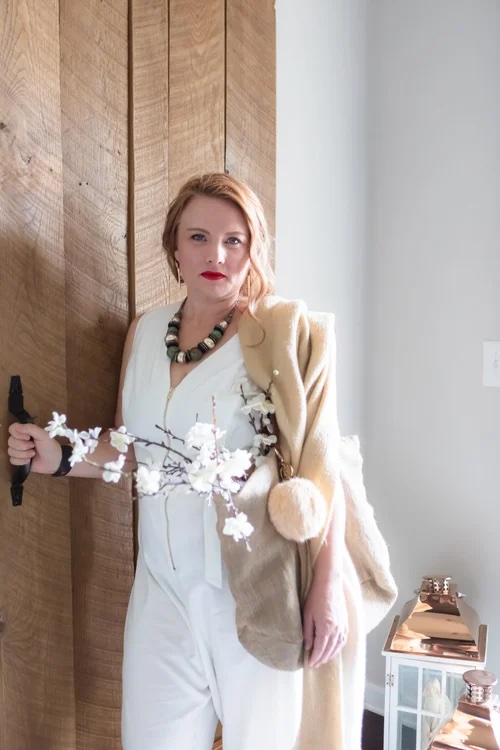
Combining her background in history, journalism, marketing, and branding, Reinert helps brands and creative professionals discover the stories behind everyday objects and use that knowledge to build connections with their audiences.
“My entire career and, well, my life actually has been me going, ‘Oh, I love that. I want to know more about it,'” she said.
That curiosity eventually became the foundation of The Lifestyle Historian, a platform built around the simple philosophy that history is everywhere.
Finding the Stories Hidden in Everyday Life
Reinert’s path to becoming a lifestyle historian was anything but conventional. She began her career studying journalism and worked as a newspaper reporter before pursuing history and eventually moving into marketing, branding, public relations, and event planning. For years, she wondered how those seemingly unrelated experiences fit together.
In 2022, after nearly a decade of consideration, she launched The Lifestyle Historian on Instagram as a personal passion project. By 2025, she had turned it into a full-time business, combining her love of historical research with her experience in creative storytelling and brand development. Today, she approaches each project with both the curiosity of a historian and the strategic perspective of a marketer.
“I mix my journalistic background, which is very factual-based, with my love and experience in design and branding,” she explained.
But her inspiration for making history accessible came from her daughters. When her youngest daughter declared that history was boring, Reinert began looking for ways to connect historical lessons to the things her children already loved. For her daughter, who was passionate about ballet, that meant exploring the origins of ballet shoes, who invented them, and how they evolved. The approach transformed history from a collection of dates and events into something personal and relevant. The experiment worked. Her daughter now considers history her favorite subject.
“You can tell history through the story behind objects in a way that you’re not going to want to just read a textbook,” Reinert said.
Why Nostalgia Matters in Interior Design
Cultural memory refers to experiences and references shared by a broader community or generation. Nostalgia, by contrast, is deeply personal. Understanding the emotional connections people have with objects can be just as important as understanding their aesthetic preferences.
Consider an avocado-green refrigerator from the 1970s. For one person, it might simply represent an outdated appliance. For another, it could immediately bring back memories of a grandmother’s kitchen, family gatherings, or childhood holidays. The object itself hasn’t changed, but the meaning attached to it is entirely different.
“If your grandmother didn’t have an avocado green refrigerator in her kitchen, that may not be nostalgic to you,” Reinert explained.
For someone who did grow up with one, however, the memories can extend beyond what the object looked like to include familiar sounds, smells, places, and people. These emotional associations give designers an opportunity to create spaces that resonate with clients on a deeper level. Designers can explore the memories and experiences that shape how clients want their homes to feel. Reinert also sees this understanding as a valuable business tool.
“It’s such an important sales tool that brands and designers need to tap into for their clients,” she said.
By recognizing an object’s emotional significance, designers can communicate its value beyond materials, craftsmanship, or price.
Looking Back to Create Something New
In an industry where trends constantly evolve, Reinert encourages designers to look backward for inspiration rather than focusing exclusively on what’s new. Understanding an object’s history can reveal how its design developed, why certain materials were chosen, and how cultural influences shaped its appearance and function.
For example, an antique statue carries more than the history of its individual creation. It also belongs to a much longer tradition of sculpture, influenced by centuries of artistic expression, available materials, cultural practices, and changing tastes.
Reinert believes this broader understanding can help designers make more intentional decisions about how objects are incorporated into contemporary spaces. It can also transform the way designers present those selections to clients. Perhaps most importantly,Reinert encourages designers to help clients see themselves as part of the object’s continuing story. A piece of furniture or decorative object is no longer simply something purchased for a room. It becomes something the client will live with, make memories around, and potentially pass down to another generation.
“This is part of your story now,” she said.
Asking Better Questions to Create More Personal Spaces
While understanding the history of objects is important, Reinert believes designers should begin by understanding the people who will live with them. Her advice is to move beyond the surface-level questions that typically guide the early stages of a design project. Function, layout, and lifestyle requirements remain essential. Designers need to know how a family uses a room and what practical needs the space must accommodate.
But Reinert encourages them to go further. That might mean asking where a client’s family comes from, whether cultural traditions play an important role in their lives, or what places they’ve traveled that hold special meaning. Designers can also ask about objects collected over time, family heirlooms or pieces that have followed clients from one home to another. These conversations can reveal opportunities to incorporate personal history into a design in ways that might otherwise be overlooked.
“The stuff is already there, and it adds to the story,” Reinert said.
For designers, this approach offers an opportunity to create spaces that feel more authentic to the people who inhabit them. By connecting those personal narratives with the history of furnishings, materials, and decorative objects, designers can create spaces that are both beautiful and deeply individual.
Turning Historical Knowledge Into a Business Advantage
As The Lifestyle Historian continues to grow, Reinert is placing an increasing emphasis on education, particularly helping creative professionals turn historical knowledge into practical business skills. Her work now extends beyond the design industry into areas including tea, fashion, tabletop, entertaining, and travel, while interior design remains especially close to her heart.
“The design industry is probably — I don’t want to say it’s my favorite, but it is,” she joked.
Reinert has been developing educational programming to help designers and brands understand how history can inform their work, strengthen their storytelling, and improve the way they communicate with clients. Her recent projects have included a webinar with the National Upholstery Association exploring how history can become part of a sales toolkit, along with additional educational collaborations.
She is also involved with The Green Chair Project in Raleigh, North Carolina, an organization that helps provide essential furnishings to families in need. Her work with the organization includes exploring opportunities connected to donated antiques. She plans to expand her educational offerings and develop a YouTube channel to share more of the stories she uncovers. Her goal remains to make learning engaging, accessible, and useful.
That commitment to education also reflects the Designer Society of America’s mission to support and empower design professionals through shared knowledge and professional development.
The Source: Bringing History and Design Education Together
Julia is taking that educational philosophy a step further through The Source, a new series of in-person educational programs created in collaboration with Jane Dagmi, managing director of High Point by Design (HPXD).
Designed specifically for the design trade, the series connects the history of materials and craftsmanship with practical strategies that designers can apply to their businesses.
The inaugural event, The Source: The Craft & Commerce of Cloth, will take place Wednesday, Nov. 18, 2026, at Market Square Textile Tower in High Point, North Carolina, during Interwoven, the textile industry’s biannual market.
The daylong program will explore the history and significance of textiles while examining how that knowledge can help designers sell, specify, and communicate the value of fabrics to their clients.
Programming includes Julia’s opening keynote, a conversation between Dagmi and designer Gary Inman, The Material Archive by Baxter Mill, and “The Common Thread,” featuring designers Cheryl Luckett and Marie Cloud.
Attendees will also have opportunities to join guided showroom tours and connect with fellow design professionals at a closing cocktail reception.
Special registration offer for DSA members
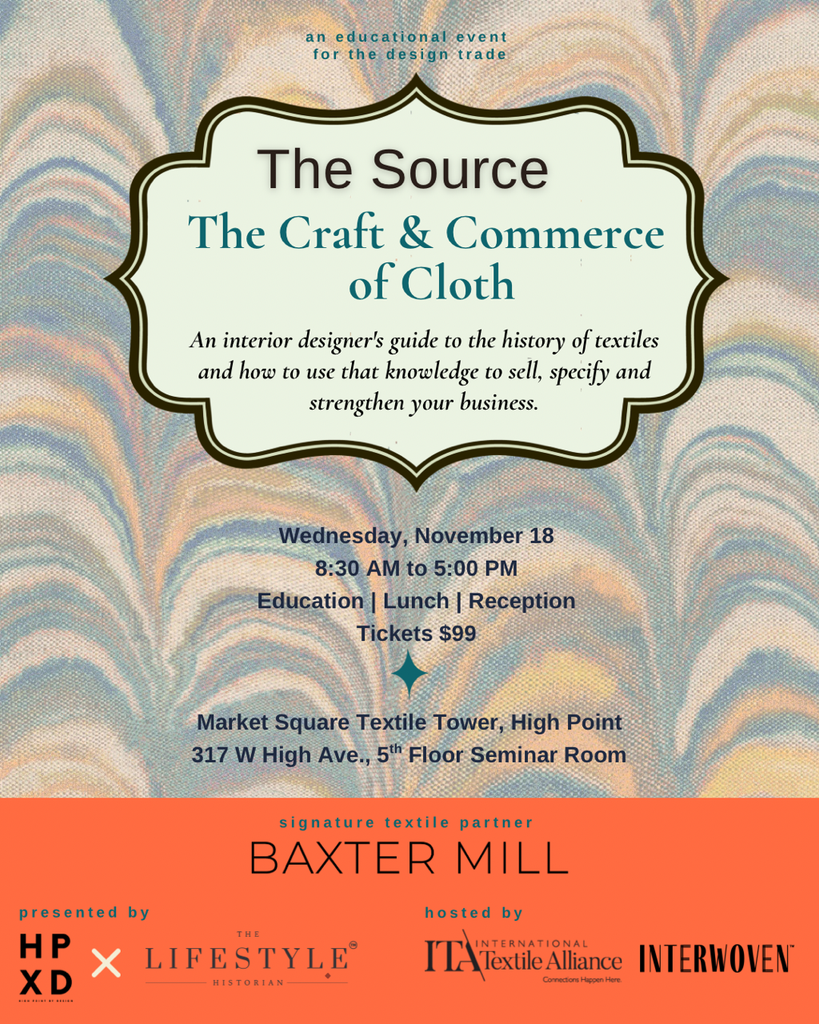
The Source: The Craft & Commerce of Cloth takes place Nov. 18, 2026, at Market Square Textile Tower in High Point, North Carolina.
Registration is $99, and Designer Society of America members can receive 20% off by using the promotional code DSAsource when purchasing tickets.
- Register for The Source on Eventbrite
- Register separately for Interwoven — required for event attendees.
Every Object Has a Story Worth Telling
For Reinert, history is a resource that can help creative professionals better understand the present and approach their work with greater intention.
Her message to designers is to remain curious, ask deeper questions, and recognize that the objects they work with every day carry stories that can strengthen both their designs and their relationships with clients.
Whether it’s an antique chair, a carefully selected textile, or a treasured family possession, understanding an object’s history can reveal possibilities that extend far beyond its appearance.
And when designers connect those histories with the stories of the people they serve, they can create something more meaningful than a beautiful room – they can create a space that feels like home.