
By Tara Duncan
Curious, thoughtful, and deeply committed to improving people’s lives through design—these are just a few of the qualities that define Nina Lichtenstein.
As the founder of Nina’s Home Design and a leading advocate for biophilic and neuroaesthetic design, Lichtenstein has built a career around a powerful idea: our environments shape far more than how a space looks. They influence how we feel, think, heal, connect, and ultimately, how we live.
Today, she is helping to expand the conversation about design beyond aesthetics into the realms of wellness, psychology, neuroscience, and human experience.
“My design philosophy is rooted in a simple belief,” Lichtenstein says. “Our environments are not neutral.”
It’s a philosophy that has guided her work for years, long before terms like “biophilic design” and “neuroaesthetics” became industry buzzwords.

A Life Shaped by Nature
For Lichtenstein, the connection between nature and design began long before she ever entered the interior design profession.
Raised in a family of conservationists, gardeners, veterinarians, and naturalists, she spent much of her childhood immersed in the outdoors.
Her mother was a renowned naturalist inspired by the work of biologist E.O. Wilson. Her grandfather and great-grandfather were conservationists and veterinarians. Family vacations and weekends were spent observing ecosystems, tending gardens, fishing, and exploring the natural world.
At one point, she was convinced she would become a landscape designer.
“I was constantly tearing up the grass in my mother’s yard and creating flower-filled rock gardens,” she recalls.
Yet her path to design was anything but traditional.
Before launching her design career, Lichtenstein worked as a professional ballroom and Argentine tango dancer, a fashion model, and later, a Montessori educator focused on nature-based learning.
Each chapter, she says, contributed something essential to the designer she would eventually become.
“Dancing taught me about movement, rhythm, and how people experience space through the body,” she explains. “Modeling taught me about visual storytelling and aesthetics. Teaching helped me understand how environments influence learning and development.”
Looking back, she sees a common thread connecting every experience.
“I was always asking the same question,” she says. “How do built environments shape human experience?”
Discovering the Language for What She Already Knew
One pivotal moment arrived unexpectedly through a Designer Society of America newsletter.
While reading an article about biophilic design, Lichtenstein experienced what she describes as an instant moment of recognition.
“I remember thinking, ‘Apparently I’m doing biophilic design,'” she says with a laugh.
For years, she had naturally incorporated elements such as natural light, organic materials, views of nature, and sensory-rich environments into her projects. What she lacked was the language and scientific framework to explain why those choices mattered.
“Discovering biophilic design felt less like learning something new and more like finding the name for something I had always known.”
That realization sparked a deeper dive into neuroscience, environmental psychology, and evidence-based design research.
Today, she combines those disciplines into an approach that balances beauty with measurable human outcomes.
“The research didn’t change how I designed,” she says. “It strengthened and validated what I had been observing for years.”
Beyond Beauty
While beautiful interiors remain important, Lichtenstein believes the design profession must broaden its definition of success.
“Design is not just aesthetic,” she says. “Design is biological. Design is behavioral. Design has measurable consequences.”
She points to growing research connecting the built environment to stress reduction, sleep quality, productivity, emotional well-being, cognitive performance, and social connection.
For Lichtenstein, successful design is measured not by how many compliments a room receives, but by how it improves someone’s daily life.
One recent project involved creating an aging-in-place bathroom for a client with mobility challenges.
After the project was complete, the client shared that the bathroom had become the safest and most uplifting room in her home.
“She said it felt like being with a dear friend,” Lichtenstein recalls. “To me, that’s the measure of success.”
Designing for Health
A recurring theme throughout Lichtenstein’s work is what she calls “human flourishing.”
Rather than focusing solely on preventing problems, she advocates for creating environments that actively promote health and well-being.
She often references the concept of salutogenesis, a framework centered on understanding what creates health rather than simply treating disease.
“We spend most of our lives inside buildings,” she says. “Why shouldn’t those environments support healing, restoration, and well-being?”
That perspective has influenced projects ranging from luxury residences to healthcare-focused product design.
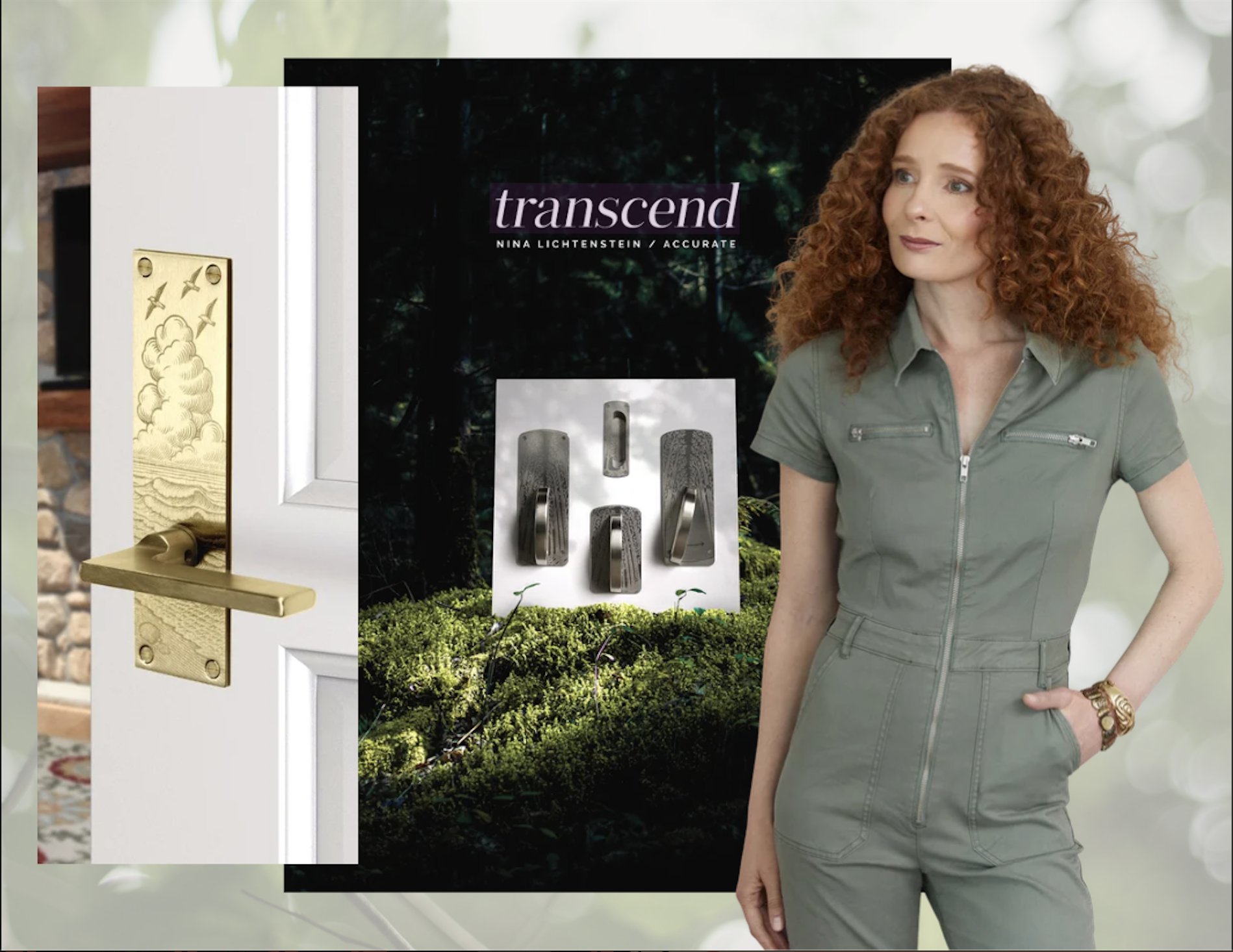
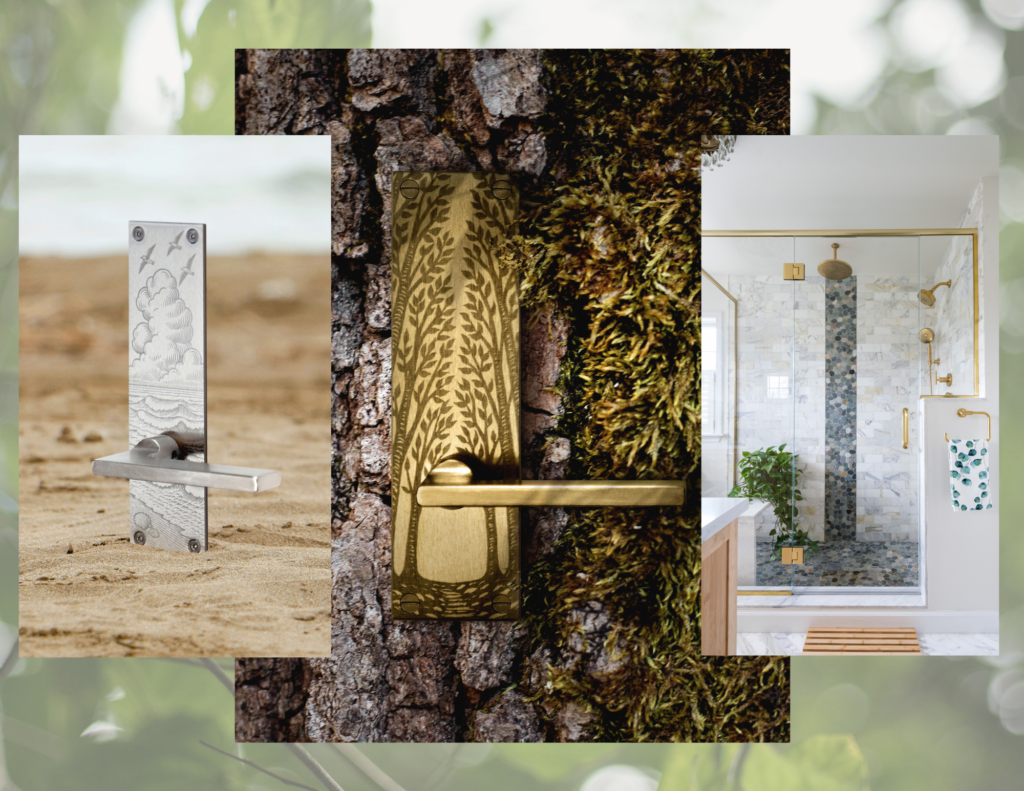
Her Transcend collection, developed in partnership with Accurate Lock & Hardware, exemplifies that approach.
The collection integrates biophilic and neuroaesthetic principles into architectural hardware through nature-inspired imagery and fractal patterns.
The goal is simple: create small but meaningful moments of calm, curiosity, and connection.
“Even the smallest design details can matter,” she says.
The collection has since expanded beyond healthcare settings into residential and commercial applications, opening new opportunities to bring nature-inspired design into everyday environments.
The Future of Design
Lichtenstein is particularly energized by the growing collaboration between designers, healthcare professionals, neuroscientists, educators, and researchers.
She believes some of the most innovative ideas in the future of design will emerge at the intersection of those disciplines.
“The future of design is not about replacing creativity with technology,” she says. “It’s about augmenting design with a distinctly human sensibility.”
While she remains curious about the potential of AI and emerging technologies, she believes empathy will always remain at the heart of great design.
“I’m fascinated by how technology can help us process research and identify patterns,” she says. “But design will always require something technology cannot replace—human understanding.”
That belief continues to guide her work as she explores new product collaborations, educational initiatives, and speaking opportunities focused on wellness-centered design.
A Career Built on Curiosity
Throughout her career, Lichtenstein has embraced lifelong learning.
In addition to earning her RIDQC credential, she has pursued certifications in construction project management and science-based design, continuously expanding her expertise.
She encourages emerging designers to do the same.
“Stay curious and never stop learning,” she says.
She credits professional organizations like the Designer Society of America with helping shape her journey, noting that both her discovery of biophilic design and many of her professional opportunities stemmed from relationships and educational resources she found through the design community.
Looking ahead, her mission remains clear.
She wants to help designers recognize the extraordinary power they have to influence people’s lives.
“Design is a more powerful force than many realize,” she says. “It has the power to improve how we experience our days, our relationships, our health, and ultimately, our lives.”
And for Nina Lichtenstein, that’s exactly what great design should do.