By Lindsay Field Penticuff
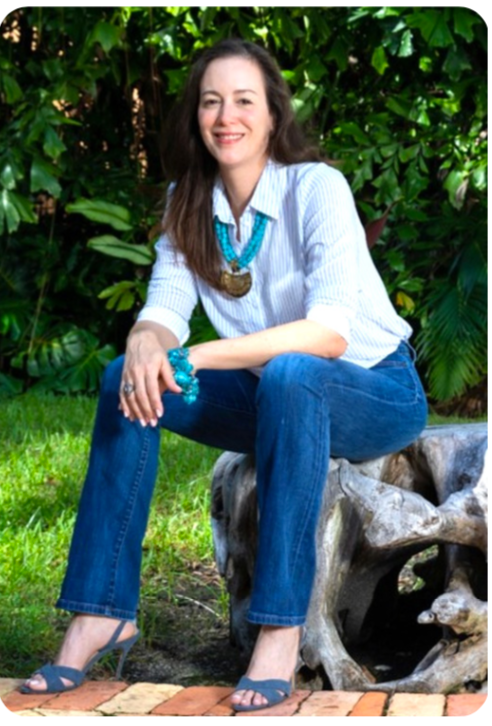
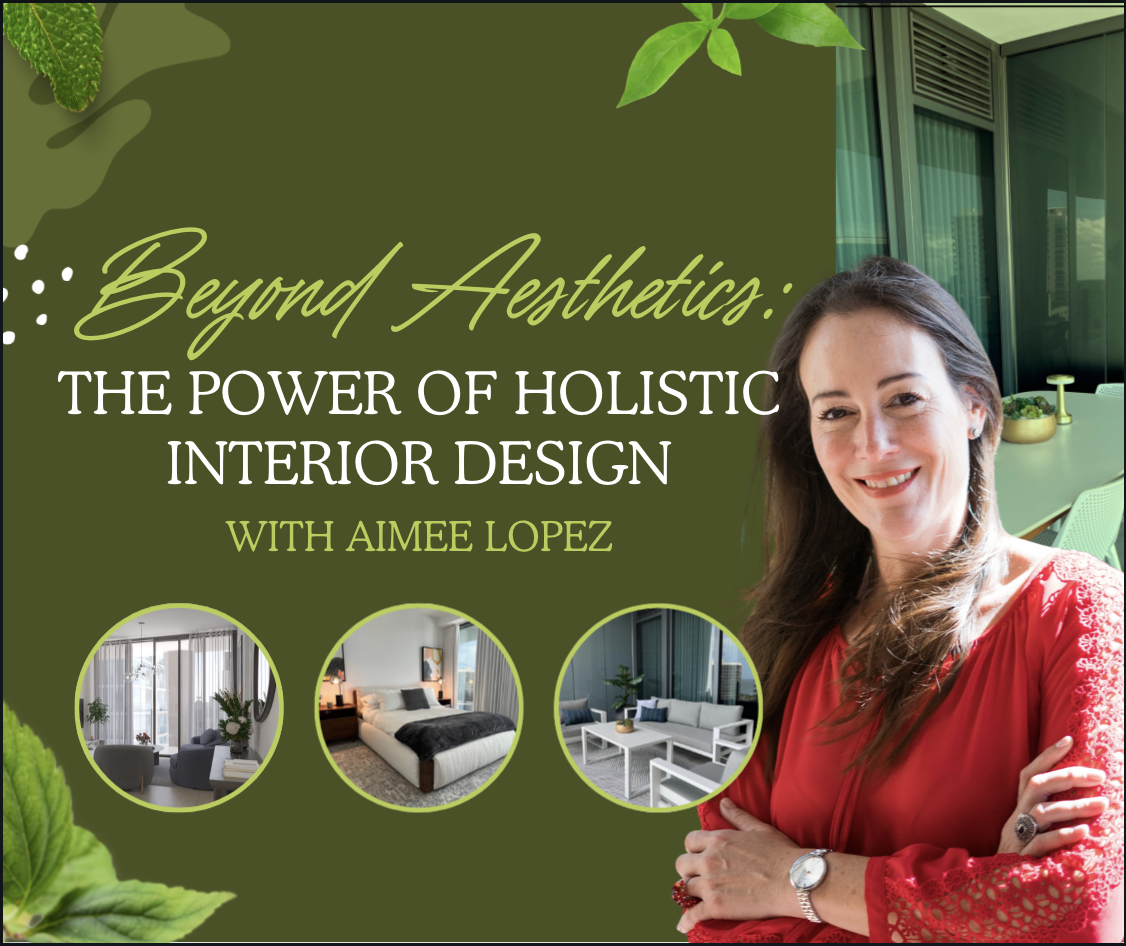
Aimee Lopez, founder of the Holistic Interiors Design Community based in south Florida, wants to help people feel better in the spaces where they live, work and play.
“I started the Holistic Interiors Design Community about two years ago,” Lopez says. “The calling came from my students and recent graduates who wanted to learn more about a holistic design practice.”
The mission of the Holistic Interiors Design Community is to raise awareness of the influence and role of interior spaces in enhancing our well-being. Lopez believes places where clients (or you) live, work and learn should be designed with more focus on a healthy lifestyle, meaningful experiences and a personal-centric view.
Lopez, who was a residential interior designer for more than 20 years, started in the industry by studying fashion showmanship, and then marketing, followed by earning a master’s degree in international business. Today, she runs the Community and teaches a six-month interior design certificate class at the University of Miami in Miami, Florida.

“Teaching has become this sacred space and an opportunity to start planting seeds about holistic design,” she says.
Lopez has had an opportunity to learn about neuroscience and how it can be applied to the field of architecture and design. She says it also leads to a better understanding of the environmental psychology behind design and how it affects individuals in a space.
“I want to share it with my students and plant seeds of awareness, so they know the spaces we are going to be interacting with will have an impact on our bodies, our minds, our emotions and our overall well-being,” she adds.
“It’s all about how you’re wired; what’s your story; how will you feel connected to a space. And now as a designer, with all that information, it’s a very powerful tool. We are going to be able to introduce elements that will help [people] function better in a space—in a home or at the office.”
Lopez says elements like color, lighting and materials used to design a space have a tremendous impact on how someone uses a space; how they live, how they behave, how they feel.
“Sometimes people think holistic is spiritualistic or like burning sage, but it’s more profound. There is a lot of science-based evidence to validate it,” she says. “If we are connected with ourselves and with the environment, then we can become more conscious about it. The more we have all of this research available to us, then we can design homes or workspaces where people will people are happier. And what happens when we are more balanced, we can contribute better toward society. It starts with ourselves. We have to feel well first. I think that’s where the future is going in our industry.”
In recent years, Lopez has been learning more about neurosciences, environmental psychology and the science of emotion, and she most recently began working on her master’s degree in neuro-architecture.
“I really want to dive into the master’s degree program that will educate me into finding out how to better understand highly sensitive people, and how I’m going to be able to help them, starting with me,” she says. “If I have been able to help myself to feel much better in spaces and be more productive, then with everything I’m studying, I can put it into practice.
“I know I can be able to help other people who will probably feel the same like me. I will be able to connect with clients and be able to guide them better.”
To learn more about Lopez’s background in interior design and her certificate program, be sure to check out our full interview, and to learn more about the Holistic Interiors Design Community, visit theholisticinteriors.com.